Thursday, April 5, 2012

Dano, 단오 — Spring festival

Dano, 단오 — Spring festival, which follows on day 5 of month 5 on the lunar calendar, which usually puts it in June on the Gregorian calendar.
It was believed that all of the energies of nature converged into one on this day. And, it was believed that Dano was an easy day for young people to fall passionately in love. Given that belief, parts of the Dano celebrations were built around attracting the opposite gender. Women would pout on their beautiful hanboks and swing to get the attention of the men. The men would participate in ssireum (traditional Korean wrestling) to show their strength to the women.
Customs:
Washing one’s hair with Changpo water
In traditional societies, women cut the roots of Changpo and made them into hairpins to prevent headaches. This custom, also called Danojang, included washing one’s hair in Changpo-boiled water to add extra shine on hair.
Marriage under the Jujube Tree
As a method for praying for an abundant year of farmhouse production, people stuck rocks between the roots of a jujube tree. This tradition is called Marriage under the Jujube Tree.
Wrestling and Swing Jump
Swing jump is a popular game between women during Dano. On the other hand, Korean style wrestling, also known as Ssireum, is very popular with men. As a custom, the winner of the Ssireum competition is awarded with a bull.


While in the past Dano was one of the three major Korean holidays (along with Seollal and Chuseok), its customs go largely uncelebrated today. But the holiday and it’s festivals aren’t forgotten. The holiday’s customs can be seen today in the Gangneung Dano Festival (강릉단오제).
 Danoje   Festival   includes  rituals such as  the Daegwallyeong Guksa Seonghwangje (a  tribute to Monk Beomil, believed to protect  Gangneung) and Yeongsinje (a deity greeting  ritual). Folk performances, ssireum wrestling,  swing riding, and tug-of-war competitions  follow these rituals. During the Danoje Festival,  visitors are also invited to participate in various events: watching a traditional wedding ceremony, making surichui rice cake, washing their hair in iris-infused water, and drinking alcohol offered to the gods. There are also regional dialect contests and other cultural programs.

Thursday, March 29, 2012

K-Pop Dance!!


Oftentimes, people get obsessed with a song for a few months, then move on to something else – and though they may forget specific lyrics, three distinctive parts remain imprinted in their minds – the tune, chorus and signature dance move. The good dance is same important as a  good song or lyrics...that is why The K-Pop Dance in 21st century became more:
Difficult
Complicated
Powerful
Energetic
Sexy


MY TOP 5 DANCE MOVES:

  1. Abracadabra
  2. Mystery
  3. Strong Baby:P
  4. Supa Luv
  5. Sorry Sorry!!!!

Thursday, March 22, 2012

Letter to Kang Dong Won


Korean Military Police

Last week In KA We watched a screening :71 Into the Fire - an amazing, toughing movie about Korean War (1950-1953). Under the influence of this movie I decided to write a letter to one of my favorite actors, who is currently serving in the army.


Dear Kang Dong Won,

How are you? I hope that you’re doing well. I got a wonderful opportunity to write a letter to a Korean star in the army, and I decided to write to you because I saw a lot of movies starring you and I think you are a very talented and handsome actor.

Now you are a soldier, who is guarding the peace and security of your country bringing pride to your family. It's already been one year since you entered in the army. I’m sure your family miss you and I can safely say that us fans miss you a lot as well. But can you imagine how pleasantly surprised they will be to find you after two years of service, - a braver, stronger and a fulfilled man who performed his duty with unwavering loyalty.

The army toughens up a man; it is a constant physical and mental challenge that disciplines a man and brings out a whole new identity in him. I am sure that you’re facing this challenge with great spirit. I am aware of the risks associated with military service, so I hope you have loyal friends guarding the country alongside you, who support you, share your troubles and keep your spirits high. And I hope your seniors are kind to you.

By the way, my name is Katerina, I'm from Estonia, but now live in London, from where I`m writing this letter to you. I am one of the students in the K-Pop Academy in London. Here we study the Korean culture and history. I can tell you that a massive number of people admire Korean films and music. Korean culture is becoming global, and I am very happy about it.

I hope you are enjoying the time out there, doing things different, daring and adventurous. And I hope the time will fly soon, so you’ll be back among your family, friends and fans. I hope the army will inspire you to create something unique and beautiful when you come back. 

Wishing you best of everything,

Katerina.


Thursday, March 15, 2012

Korean Dinner (HW 3)

Yesterday I made a Korean dinner for my friends. It actually came out very nice...every one liked it. We had LOTS of fun and I was very happy with my Korean cooking skills:D  
So...The menu includes: Beef Dukbokki as a starter, Japchae as a main dish and for a dessert i made Pepero. 

Let`s take a look how i did it and what did I use....I made few pictures while I was cooking!! (Sorry for the bad quality of the photos):DDD


Beef Dukbokki (떡볶이)
Spicy Rice Cake with beef and vegetables. 


Tukbokki is one of Korea's popular snacks that are loved by teenagers as well as adults. It is made from garaetuk, a chewy long cylindrical rice pasta cooked with gochujang (red chili pepper paste).


Recipe Ingredients:
10 oz garaetuk
4 oz beef
⅓ onion
1-2 stalk(s) carrots
1 tsp of gochujang or more, depending on how spicy you want the dish to be
1 tsp sugar
1 green onion
1 tsp garlic
Sesame seeds


For preparation, make sure the garaetuk is soft and chewy for cooking.

Cut the onion and carrot into widths of ½ inch and lengths of 1 inch.

Mix the ketchup and hot pepper paste in a pot, then boil it with added sugar, lastly sprinkle in some sesame seeds.

Pour oil into a pan with garlic and green onions then fry the onions, carrots and beef.

When the vegetables are lightly fried, put the garaetuk with the mixed sauce for 5-8 minutes.

Serve hot.


Jap-chae (잡채 ) 
Vermicelli Noodles 

Japchae is a stir-fried dish that combines sweet vermicelli noodles, thinly slices of beef, and various vegetables. Japchae is often served at Korean parties and during special occasions as the main dish.


Recipe Ingredients
12 oz noodle (Dang Myun)
4 oz beef
5 shitake mushrooms or Chinese black mushrooms
1 carrot
1 onion
1 egg
⅓ lbs spinach
5 tbs oil
1 tbs sesame seed oil
2 tbs soy sauce
Salt & black pepper (pinch)
Sesame seed (pinch)
1 tbs minced garlic
1 tbs chopped green onion


Soak mushrooms in water for 15 minutes. Cut off stems then cut the caps into thin strips.

Cut beef into thin strips and marinate it with the mushrooms in a seasoning of: soy sauce, sugar, minced garlic, sesame seed oil, chopped green onions, and a pinch of ground pepper.

Cut carrots and onion into thin strips (julienne).

Cook spinach in boiling water for about two minutes. Cool spinach in running water. Squeeze the water out of the spinach. Season the spinach slightly with salt and sesame seed oil.

Batter and fry the egg in a pan with a pinch of salt. Once cooked and cooled, cut the egg into thin slices.

Cook the noodles in boiling water for about 2-4 minutes or until soft (You may want to cut the noodles in half before hand if they are too long). Rinse in cold water and drain.

Start cooking the beef and mushrooms with a bit of oil.

When beef is cooked, add carrot, onion, spinach, and noodles and stir-fry. 

When vegetables are cooked, add the sliced egg and use salt and soy sauce to season the dish to your taste.
Put it all in a dish and sprinkle some sesame seeds for the final touch.

Can be served hot or cold.


Pe-pe-ro (빼빼로) 

Chocolate Covered Biscuit Sticks

Pepero is a biscuit stick covered with chocolate with chopped hazelnut.
This snack is so popular in Korea that it even has its own holiday named "Pepero Day". 

Recipe Ingredients

Biscuit sticks

White and milk chocolate

Hazelnuts
Melt the chocolate in a bowl

Meanwhile pulse a handful of hazelnuts (or hcop them)

Dip pepero sticks in chocolate and decorate with chopped hazelnut
Hill in the refrigerator until chocolate has firmly set.
Enjoy!!!


Thursday, March 8, 2012

Interview

Today I finally finished my homework for week 2:) I made a video where i interview my friends about Hangul and Korean language.
He he:DDD

Tuesday, March 6, 2012

History of Hangul

Hangul/한글 the Korean alphabet


The Korean alphabet was invented in 1444 and promulgated it in 1446 during the reign of King Sejong (r.1418-1450), the fourth king of the Joseon Dynasty. The alphabet was originally called Hunmin jeongeum, or "The correct sounds for the instruction of the people", but has also been known as Eonmeun (vulgar script) and Gukmeun (national writing). The modern name for the alphabet, Hangeul, was coined by a Korean linguist called Ju Si-gyeong (1876-1914). In North Korea the alphabet is known as 조선글 (josoen guel).

The Korean alphabet was associated with people of low status, i.e. women, children and the uneducated. During the 19th and 20th centuries a mixed writing system combining Chinese characters (Hanja) and Hangeul became increasingly popular. Since 1945 however, the importance of Chinese characters in Korean writing has diminished significantly.


The Hangul alphabet (한글)


Beautiful video about Hangul <3

King Sejong, a scholar, placed great emphasis on scholarship and education. He promoted cultural, economic and scientific research. He instituted han'gul, the Korean script. Korea today enjoys many other lasting benefits of his rule.

King Sejong, whose epithet is "the Great," is considered to have been one of the most outstanding Korean kings of the Choson Kingdom (1392-1910).

King Sejong contributed to Korean civilization in a number of other ways, as well. He made improvements in the movable metal type that had been invented in Korea around 1234. He initiated the development of musical notation for Korean and Chinese music, helped improve designs for various musical instruments, and encouraged the composition of orchestral music. King Sejong also sponsored numerous scientific inventions, including the rain gauge, sundial, water clock, celestial globes, astronomical maps, and the orrery, a mechanical representation of the solar system.

Friday, March 2, 2012

Movie Review

War of The arrows / 최종병기 활

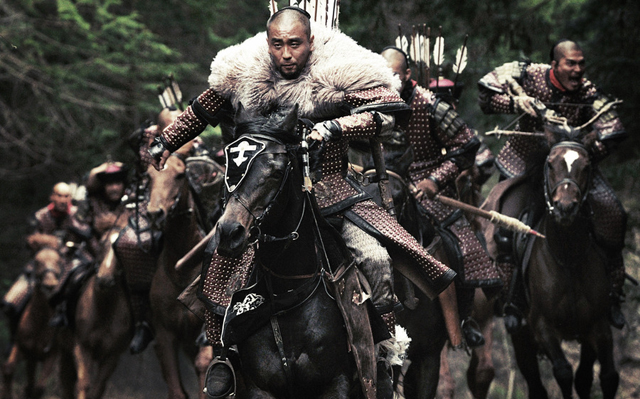
“War of the Arrows” focuses on an archer, played by Park Hae-il, who sets out to rescue his sister during the Manchu invasion of Korea.


During the Second Manchu invasion of Korea in 1636, a village is attacked by Manchurian soldiers. They kidnap Ja-In on her wedding day with her childhood sweetheart Seo-Goon. Her brother Nam-Yi, a skilled archer and hunter, returns to the village and learns his sister was kidnapped into slavery. Nam-Yi has a tragic past; as children he and Ja-In witnessed their father being betrayed and executed by King Injo and then they were raised by Seo-Goon's father. Ja-In was sold to Prince Dorgon whose ally, Jyusthina, is his best archer, troop leader and commands an elite force of warriors. As Nam-Yi seeks to rescue his sister he clashes with Jyusthina and his troops.


It’s hard not to love Asian cinema. It delivers a style and an intensity not often in found in other films. If you like action movies with a historical flair, then "War of the Arrows" is definitely for you. Once it starts, it just keeps on going and keeps you on edge for the ride. And what’s surprising is that the movie still allows for character exposition; something South-Korean cinema is revered for and should be proud of (in case they aren’t).


“War of The Arrows” has a solid story, part romantic, part family story and part historical action epic all underscored by a sweeping vision that is somehow both grand and grubby. Enough so, where you will be entertaining and not feel like you wasted your coin. 

It really all came down to the man’s strength being his promise and his arrow. He was strong but he wasn’t invincible and he showed his fear as much as his courage. Also, the female lead wasn’t left as just a damsel in distress. Yes, she was in trouble, but she defended herself and held her own to the best of her abilities, which was quite a refreshing thing to see.


Directed by Kim Han-Min
Produced by Won-seok Jang and Sung-hwan Kim
Written by Kim Han-Min
Starring Park Hae-il
Moon Chae-Won
Ryoo Seung-Ryong

Music by Kim Tae-sung